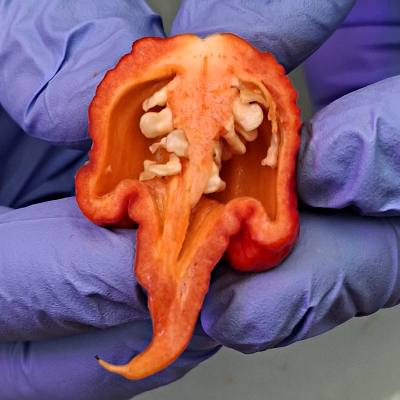
That fiery kick isn’t really “heat” at all — it’s chemistry tricking your brain. Chilli peppers produce a compound called capsaicin, concentrated mostly in the pith (placenta) holding the seeds, not the seeds themselves.
Capsaicin binds to a receptor called TRPV1, which normally detects actual heat above 43°C. When capsaicin locks onto it, your nerves fire the same “hot!” signal they’d send for a burn — even though nothing is actually cooking your tongue. Your brain can’t tell the difference, so it reacts with sweating, watering eyes, and a racing heart.
Plants evolved this defence to deter mammals from eating their fruit, while birds (which lack TRPV1 sensitivity to capsaicin) happily eat and spread the seeds unharmed.
Growing conditions matter too — stress from heat, dry soil, or low nitrogen often pushes plants to produce more capsaicin, making home-grown chillies punch harder than store-bought ones.
Why do chilli peppers burn?